Who approved this?
An AI support agent issues a $40,000 refund. Three weeks later someone asks the obvious question: who approved this?
The audit trail is a text file. It says Alice did. It may be true. Nothing in the file proves it.
That example comes from Treeship; the video was created by Amit Shrivastava. Once agents buy, refund, deploy and hand work to other agents, humans will no longer sit between every decision and action. That creates the speed—and makes “we can check the logs later” untenable.
–
TLDR: Every consequential agent action needs a portable receipt binding the actor, its authority, the operation, its sources and any approval. That receipt must be verifiable without trusting the agent or its vendor. It still does not prove the decision was correct.
–
A log is not proof
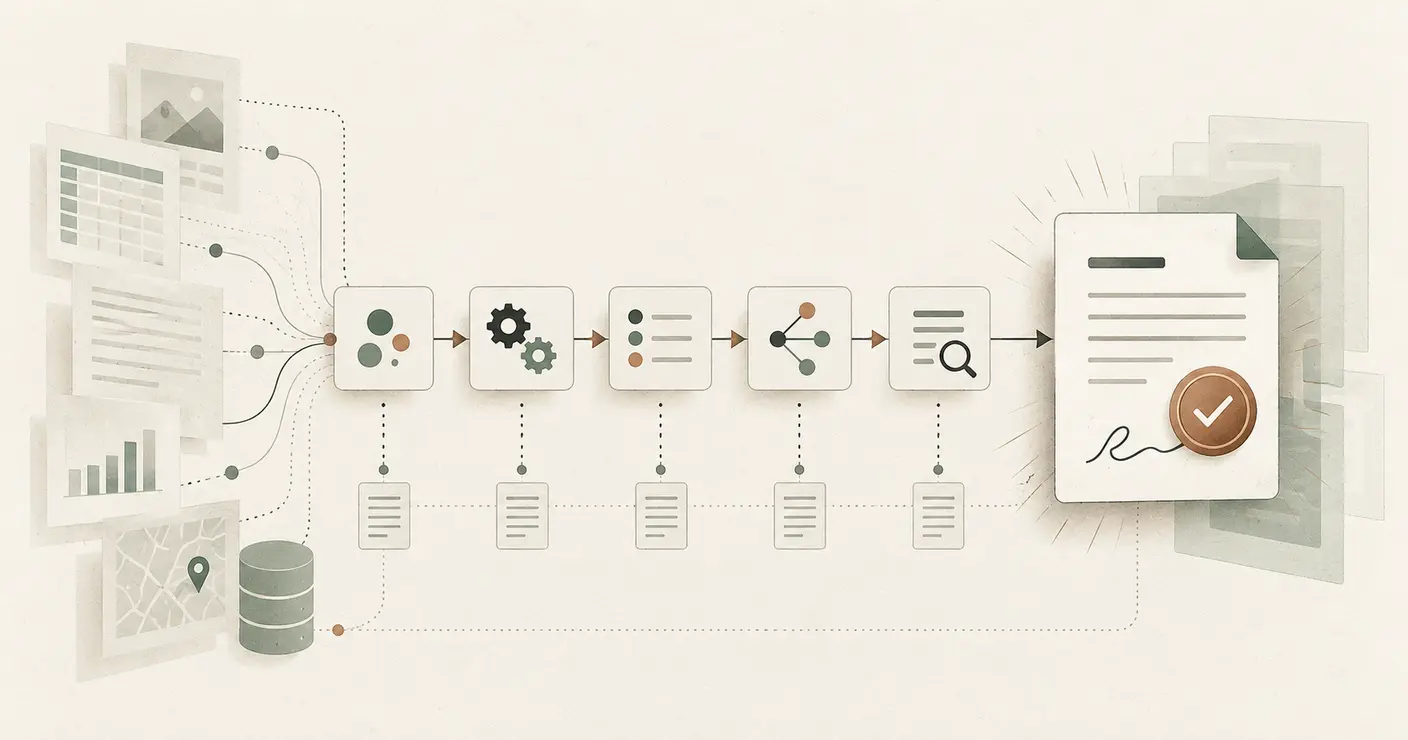
A normal audit log is written by the system whose behaviour is in question and can be rewritten after the event. A useful receipt must instead bind who acted and under whose authority; the exact tool call, inputs and outputs; the sources and policy used; any approval; and the resulting state change.
The information matters as much as the action. An agent can execute a refund perfectly from a hallucinated policy. Source identifiers, retrieval times and content hashes should therefore travel with the receipt. Sensitive material can stay private while its digest proves which bytes were used.
The receipt and the reality
Treeship works at this evidence layer. It signs captured actions, approvals and handoffs, links them into a chain and makes them independently verifiable. Its documentation makes the essential distinction clear: a receipt proves what was reported, by which key, in what order and under whose authority. It does not prove the report was true.
If an API returns deployed: true while production is broken, the receipt preserves a tamper-evident lie. The final layer must be an independent read-back. “The tool returned OK” and “the world changed as intended” are different claims.
Verification has to run at agent speed
The receiving agent must verify this evidence before continuing: trusted identity, valid delegation, permitted action, fresh sources, intact chain and proof of the outcome. If a check fails, it refuses the handoff or escalates it. No valid receipt, no next action.
Humans move up a layer, setting policies, trust roots, spending limits and exceptions. The agent economy will not pause for someone to inspect a dashboard. “Did the agent do it?” should be answered with a receipt. “Was it the right thing to do?” remains a separate question.